

Innovation Is Easy. Reactions Are Hard.
Innovation Is Easy. Reactions Are Hard.
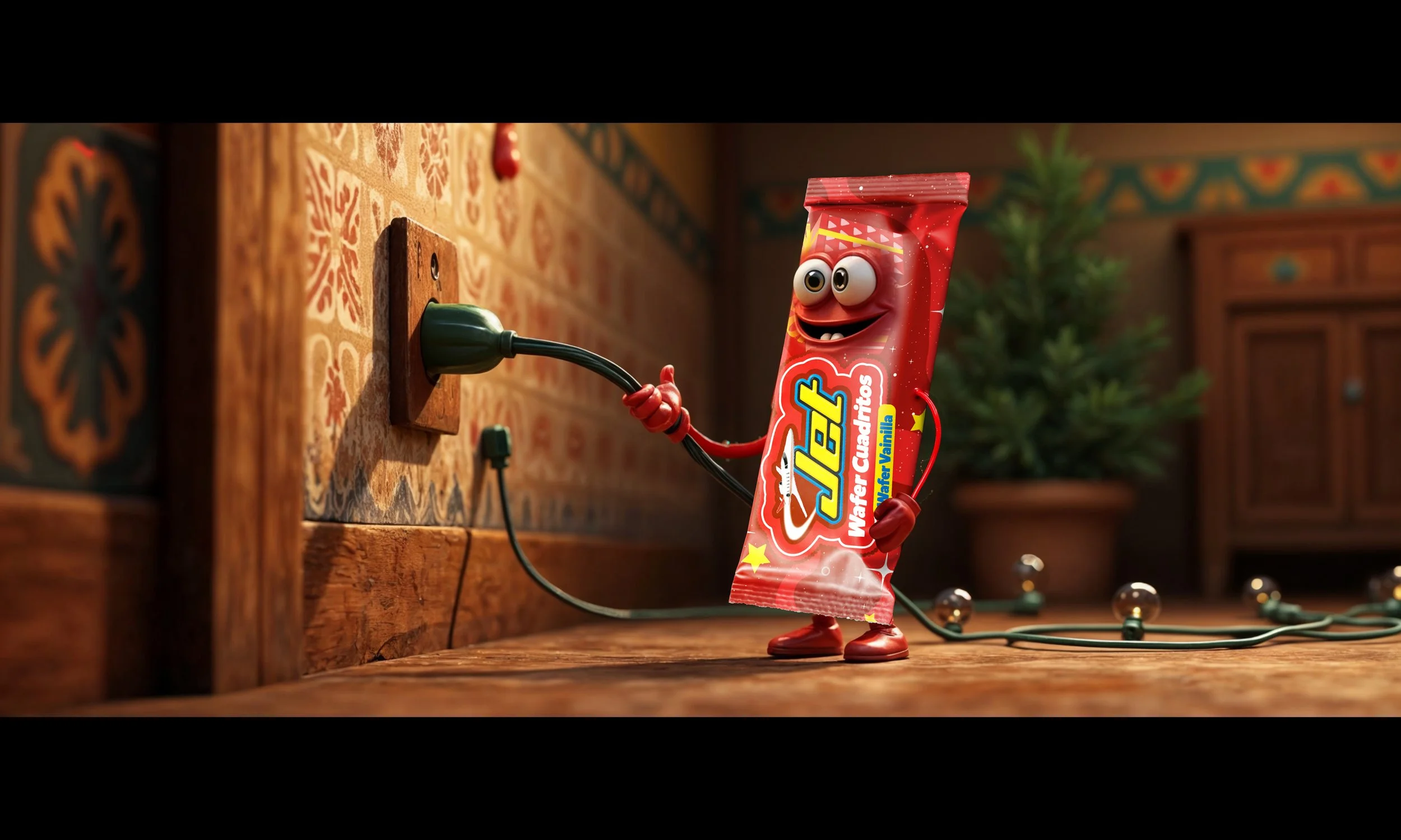
A few years ago, we produced one of Colombia's earliest AI-generated animated commercials for Chocolatinas Jet, one of the country's most iconic brands.

From a production perspective, the project was exciting.
The technology was new.
The creative possibilities felt enormous.
And the brand was willing to explore unfamiliar territory.
What happened next was something we anticipated.
But experiencing it firsthand was very different.
The reaction was immediate.
And not everyone liked it.
The Internet Doesn't React To Technology
Looking back, one of the biggest lessons from the project is that people rarely react to technology itself.
They react to what the technology represents.
Some viewers were curious.
Some were fascinated.
Others were skeptical.
And some were openly hostile.
The conversation quickly moved beyond the commercial itself.
People began discussing creativity, originality, authorship, jobs, artistic value, and the future of the industry.
The campaign had become something larger than a campaign.
It had become part of a cultural conversation.

Innovation Often Arrives With Resistance
Before the commercial was released, I had already warned the client that strong reactions were possible.
Not because the work was bad.
Because it was different.
New technologies have always created discomfort.
Photography was criticized.
Digital art was criticized.
CGI was criticized.
Social media content was criticized.
Artificial intelligence is simply the latest chapter in a long history of creative disruption.
That does not mean criticism should be ignored.
But it does mean criticism is often part of the process.
A Difficult And Valuable Lesson
Professionally, the campaign generated exactly the kind of discussion we expected.
Personally, it was harder.
As creators, we like to believe that audiences will focus on the effort, the craft, and the intention behind the work.
Reality is rarely that simple.
Reading hundreds of negative comments is never pleasant.
No matter how confident you are in the project.
No matter how much preparation went into it.
No matter how strongly you believe in the creative decision.
At the time, it felt like a setback.
Looking back, it was one of the most valuable learning experiences of my career.
Innovation may be exciting in theory.
In practice, it can be deeply uncomfortable.








Then Something Interesting Happened
Shortly afterward, larger brands began facing similar reactions.
One example was Coca-Cola's AI-generated holiday campaign, which generated criticism on a much larger scale than anything we experienced.
What initially felt like an isolated reaction suddenly looked like part of a broader industry conversation.
The debate was not about a single commercial.
It was about a creative industry trying to understand a new technology.
And that conversation is still happening today.

The Most Valuable Outcome Wasn't The Technology
Looking back, the most important lesson was not technical.
It was human.
The campaign revealed how deeply people care about creativity.
About authorship.
About artistic identity.
About the future of creative work.
Whether people loved the commercial or hated it, they were emotionally invested in the conversation.
And that made it meaningful.

Innovation Requires A Certain Amount Of Courage
Every generation inherits technologies that challenge existing ways of working.
Some are adopted immediately.
Others take years to find acceptance.
No one knows exactly where AI will ultimately fit within the creative industry.
What I do know is that experimentation matters.
Not every experiment succeeds.
Not every audience will respond positively.
But without experimentation, there is no progress.

What I Believe Today
Looking back, I no longer think of that campaign as a success or a failure.
I think of it as a learning experience.
The project taught me that innovation is rarely judged only by the quality of the work itself.
It is also judged by timing, expectations, culture, and the emotions people attach to change.
Years later, I remain optimistic about AI.
Not because I believe it will solve every problem.
And certainly not because I think every creative challenge should be approached with AI.
I am optimistic because I have personally experienced projects that would have been difficult—or impossible—to pursue without it.
One of Latin America's earliest AI-generated graphic novels.
More than 50,000 images.
New storytelling formats.
Future game development projects that would have felt completely unrealistic only a few years ago.
For me, the most interesting thing about AI is not efficiency.
It is possibility.
The ability to attempt ideas that previously existed only as ambitions, sketches, or unfinished notebooks.
That does not erase the concerns.
It does not invalidate the criticism.
But it does remind us that every new technology creates both challenges and opportunities.
The difficult part is learning how to navigate both.
And sometimes, the most valuable lessons come from the projects that generate the strongest reactions.